Electrum Finance Overview
Reconciliation
Reconciliation is a detailed comparison of two or more sets of data that describe the same transaction. The aims are to ensure that parties on either end of the transaction have the same view of the transaction outcome, and to identify, investigate, and resolve any discrepancy.
Usually, only financially impacting transactions are considered. Informational transactions – such as lookups – and declined transactions are typically not included in reconciliation processes.
Electrum Finance
The Electrum Finance is a collection of tools to facilitate the reconciliation of transaction records between multiple parties, calculation of principal settlement amounts and fees, and generation of reports required for finance processes. The Electrum Finance engine performs two-way reconciliation between parties to ensure that the view of transactions from either end is the same.
In a typical scenario, Electrum Finance receives transaction information from both the Electrum customer's back-end processing system and some external system. Electrum Finance then compares the data from the two sources, and assigns a reconciliation status to the transaction based on whether the data from the two parties agrees or disagrees.
Transaction Information
Reconciliation requires that both integrators (the Electrum customer and the external system) provide detailed transaction information to Electrum Finance. This information includes:
- Transaction identifiers
- Transaction state (e.g., whether it was authorised/successful or declined)
- Transaction amounts and dates
Transaction information can be provided in two ways.
- Via a transactions extract (mark-up or mark-off file): This is a file containing a list of all the transactions within a specified time period. The file can be transferred via SFTP to a secure location, or dropped into an entity-specific AWS S3 bucket. Electrum can pick up the file from the SFTP server or S3 bucket and transfer it to the Electrum Finance engine for processing.
- Via event postings: These are informational notifications that the Electrum customer or other external entity may send to Electrum for a particular transaction, at the time of processing. Such an event posting contains the payload of the transaction and all associated information relating to the transaction. Electrum can consume these events and use them for reconcilation.
Mark-up file is the term for the reconciliation file produced by the downstream entity. Mark-off file is the term for the reconciliation file produced by the upstream entity.
Mark-up/mark-off files and event postings therefore provide the same information required for reconciliation in Electrum Finance. An entity may provide transaction information by either method. Integrators do not have to provide transaction information via the same method. If the transaction data from either end is provided using different methods or file formats, the Electrum software is able to map the equivalent fields between the two data sets. This means that the correct fields can be compared during reconciliation.
Procedure
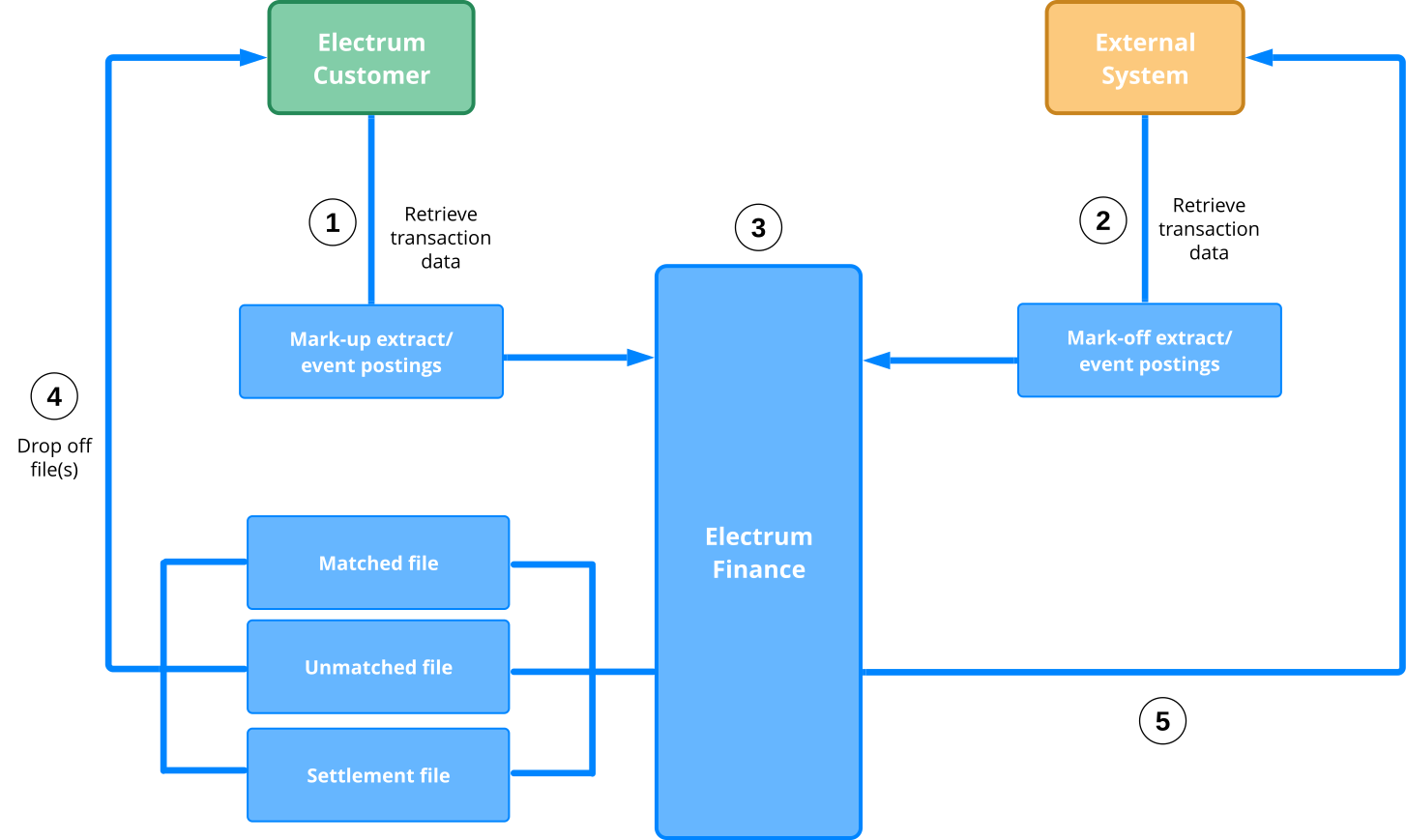
The Electrum customer sends a transactions extract file, containing the records for all transactions processed within a specified period, to an agreed-upon location. Each line of the file contains a single transaction record from their point of view. Alternatively, the customer sends a continuous stream of event postings to Electrum as the transactions occur.
The external system (e.g., a service provider) sends a transactions extract file, containing the records for all transactions processed within a specified period, to an agreed-upon location. Each line of the file contains a single transaction record from their point of view. Alternatively, the external system sends a continuous stream of event postings to Electrum as the transactions occur.
The transaction reconciliation process occurs as follows:
- Electrum Finance retrieves the transactions extract files from their file locations, or refers to the stored event postings.
- The Electrum Finance engine uses predefined 'matching' fields to map corresponding transaction records from the file(s) or event postings provided by the two systems, so that the appropriate records can be compared with one another.
A matching field is one that helps to identify two transaction records that describe the same transaction. An example of a matching field is rrn, or retrieval reference number, which is set by the transaction originator and is the same for all messages in a given transaction. A date-time string is also considered a matching field. The combination of matching fields is used to identify a particular transaction.
If a transaction contains only one record, and no corresponding record from the partner entity, then it is considered unmatched.
- Two records describing the same transaction are then reconciled by comparing specific 'reconcilable fields'.
Reconcilable fields are ones that ensure that two matching transaction records are in agreement on the outcome of a transaction.
Examples of reconcilable fields are transaction status (e.g., CONFIRMED, REVERSED, and so on) and amount (the monetary value of a transaction).
All reconcilable fields of matched transaction records must agree for the transaction to be considered reconciled.
- If all reconcilable fields of matched transaction records agree, then these transactions are considered to be matched.
- If one or more of the reconcilable fields of matched transaction records do not agree, then these transactions are considered to be partially matched.
Using the above process, Electrum Finance assigns a recon status (matched, partially matched, or unmatched) to each transaction the transaction is processed by the system.
Where applicable, automated business rules are used to automatically resolve partially matched transactions or temporarily handle unmatched transactions.
Operators with the appropriate permissions can also use the Electrum Console to manually handle any exceptions (matched or unmatched transactions).
- Once all automation rules have been applied and operator actions have been finalised:
- Electrum generates reconciliation reports, which are files of matched, unmatched, and partially matched transactions. These are sent to the Electrum customer along with any other required files, such as settlement files.
- The Electrum customer and external system must manually resolve any remaining partially matched and unmatched transactions.
- In some cases, Electrum may produce a mark-up file for the other party's system if they require this for their own reconciliation process.
Reconciliation Exception Handling
Unmatched and partially matched transactions are considered as reconciliation exceptions and must be investigated further and resolved.
Unmatched Transactions
These are transactions for which there is only one record; that is, either the Electrum customer or external entity did not provide a matching transaction record.
Unmatched transactions may remain in the system for a specified period (typically 48 hours) to allow time for late files – possibly containing the corresponding records – to be delivered.
Once Electrum Finance has identified all unmatched transactions the following will occur:
- Automated resolution may take place to accept or reject unmatched records based on configured business rules;
- An operator may apply manual resolution of unmatched records, to be matched or rejected.
- An Electrum-generated unmatched recon report (i.e., a file with all unmatched transactions for a given time period) may be provided.
Partially Matched Transactions
These are matched transactions for which the reconcilable fields do not agree.
Once Electrum Finance has identified all partially matched transactions the following will occur:
- Automated resolution may take place to accept records in favour of one party or reject them, based on configured business rules;
- An operator may apply manual resolution of partially matched, to be matched in favour of one party or rejected.
- An Electrum-generated partially matched recon report (i.e., a file with all partially matched transactions for a given time period) may be provided.