Dual and Single Messaging
Dual messaging involves the use of two separate messages during any financially impacting transaction.
- An authorisation message containing all necessary details of the request
- An advice message to finalise the state of a transaction. Advice messages can be either positive (in the form of a confirmation message) or negative (in the form of a reversal message).
A financially impacting transaction is any transaction which exchanges or transfers funds or monetary value between entities. They include:
- Money order creations
- Purchases
- Refunds
- Voucher creations and redemptions
Transactions such as information lookups do not require advice messaging.
Only one type of advice message can be sent to finalise a transaction. This is because an advice finalises a transaction. It advises all connected systems as to the final state of a transaction.
For example a confirmation cannot follow a reversal, as a confirmation informs all systems that a transaction succeeded. The inverse is true for sending a confirmation after a reversal.
When an originating system receives a message from upstream in response to an authorisation request, it sends an advice message to finalise the transaction.
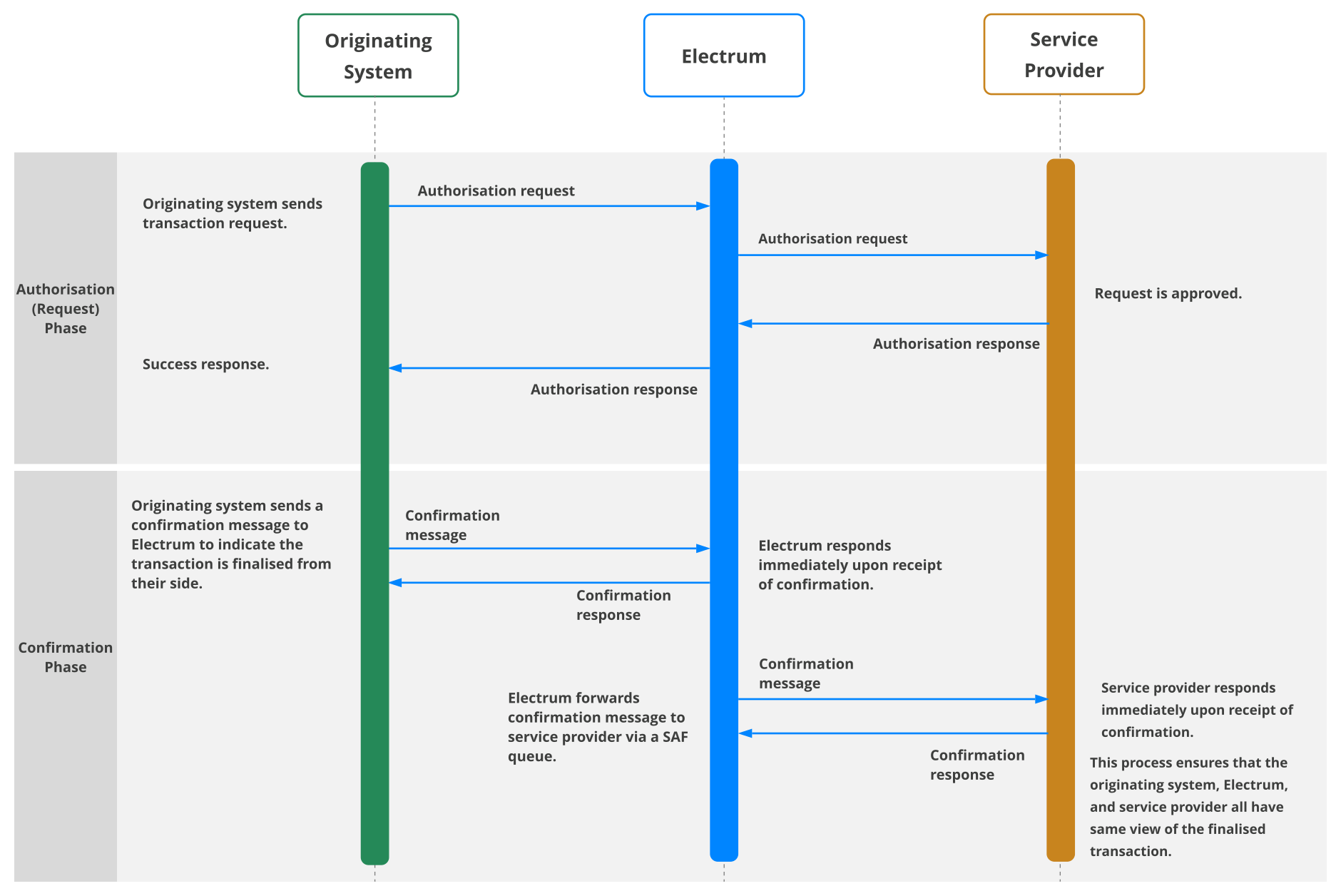
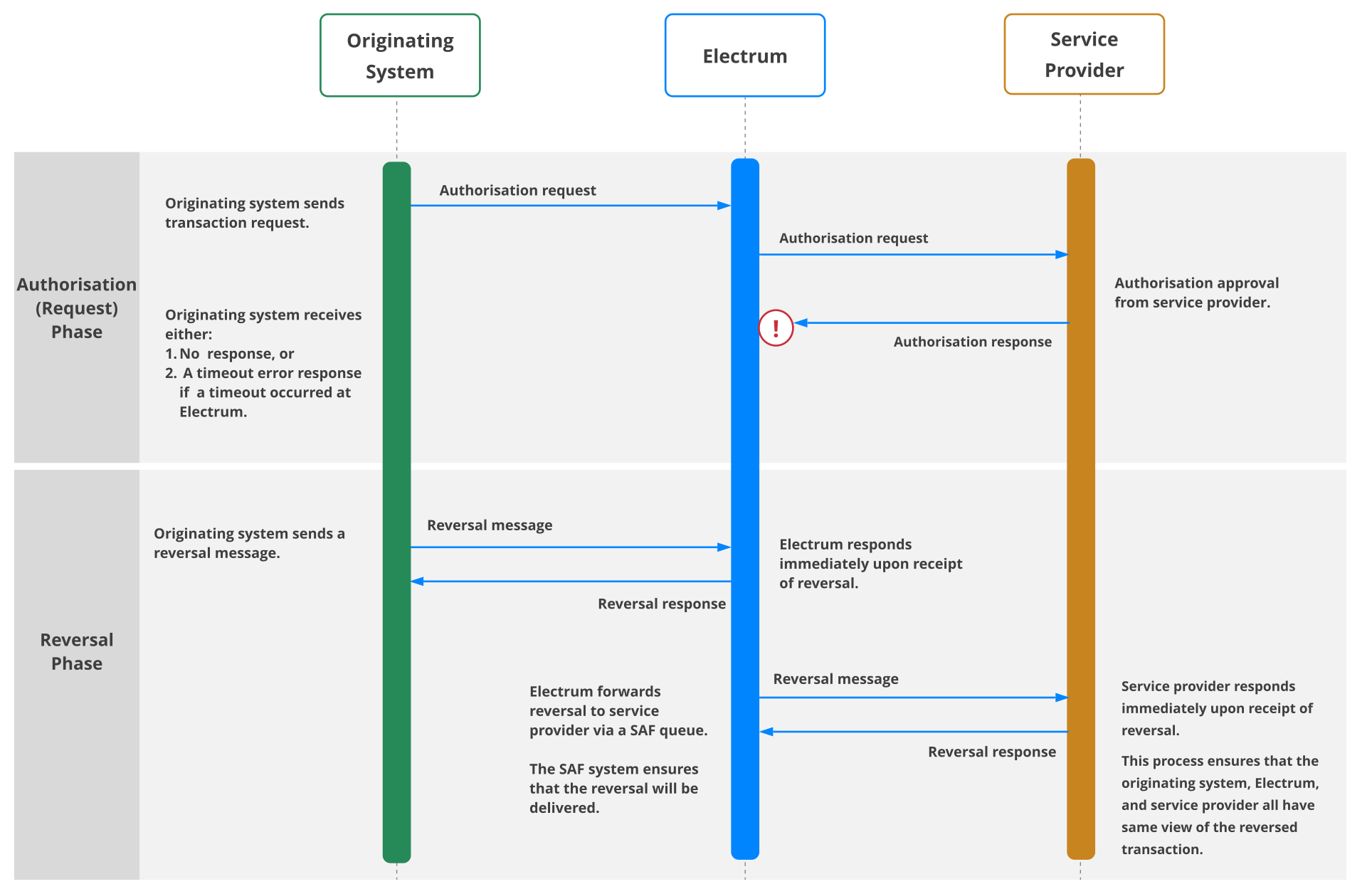
Advice messages are usually submitted via store-and-forward (SAF) queues, whereby messages are stored on the sending entity's server until they can be sent. The SAF system ensures eventual delivery of the message to its destination, however, delivery may not occur immediately (i.e., within the timeframe of the consumer experience).
When the originating system sends an advice message to Electrum, Electrum responds immediately with an acknowledgement. The originating system can then consider the transaction finalised, even though the advice may not have been delivered to the service provider yet.
The upstream system returns an acknowledgement to Electrum as soon as it receives the advice. The upstream cannot accept or decline an advice message but can only acknowledge it with a response.
Advice messages therefore help ensure that all entities – originating system, Electrum, and service provider – reflect the same state of the transaction.
Where transaction tender fits in the dual messaging pattern
For retail integrations it is recommended that the consumer tenders after the authorisation stage of a transaction that involves an authorisation phase and confirmation phase. This is because it is typically easier to reverse an authorisation via the dual messaging functionality than it is to undo a payment into an account of some kind (which can typically take upwards of 3-days to come into affect).
For banking integrations, where the bank owns the payment rails upon which tender is run it is recommended that tender take place before the authorisation leg as in this case reversing the tender is typically easier and more reliable than reversing the authorisation.
For physical point-of-sale (POS) integrations, If SAF queues are used along with the dual messaging format, a consumer does not need to wait after paying for the POS to receive a confirmation response. This is because the SAF queue ensures that the message finalising the transaction will eventually be delivered.
Confirmations
A confirmation finalises the request and informs the upstream system that the transaction can be considered to be completed successfully.
Reversals
A reversal may be sent in the case of mid-transaction error scenarios, to inform the upstream system to reverse any actions resulting from the original request.
Read more about reversals here
POS (point of sale) systems generally use dual messaging to account for transactions failing after the authorisation has been processed. This might be because, for example, the consumer has insufficient funds to make payment, or the POS fails to vend the goods.
Single Messaging
Single messaging systems contain both the authorisation and confirmation/settlement legs in one message.
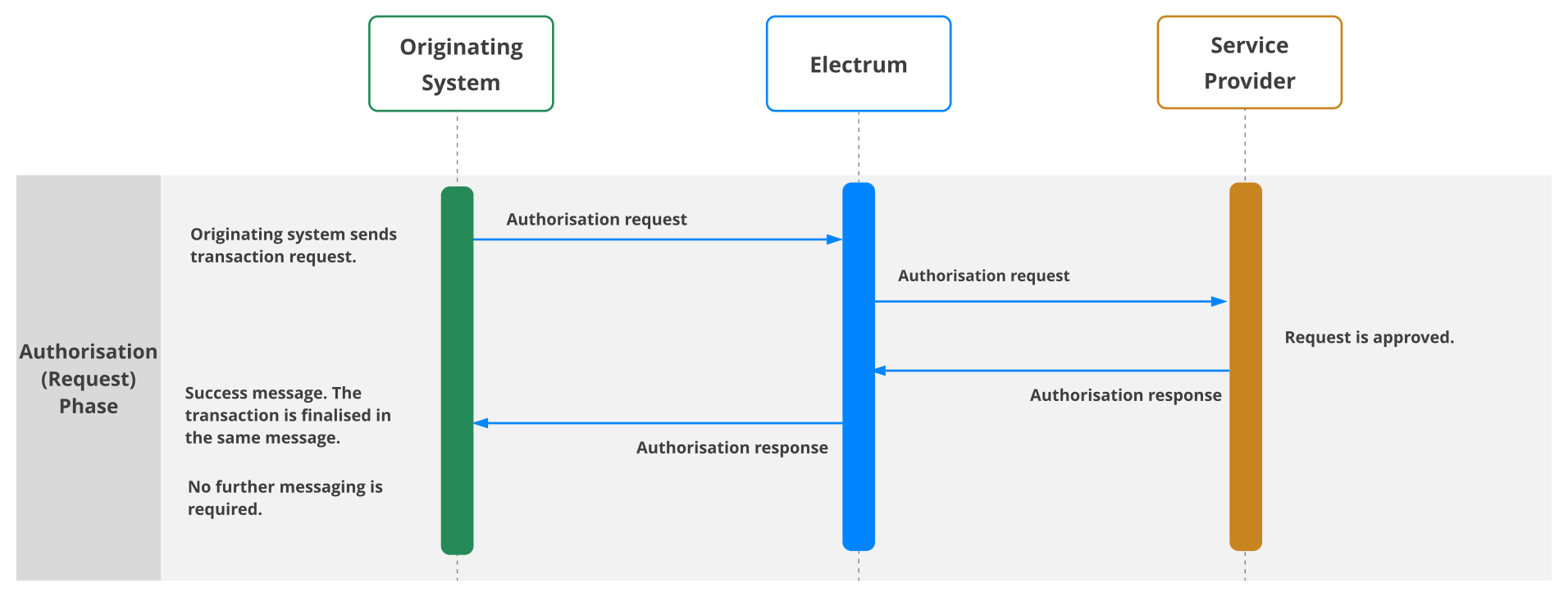
Digital channels are typically single messaging systems.
The Importance of Advice Messages
The Electrum APIs use advice messaging to ensure that the originating and provider systems have the same view of the final state of any financially impacting operation. This means that each operation that has a financial impact needs to be followed by an advice - either a confirmation or a reversal (never both).
The use of advice messaging reduces reconciliation exception events by:
- Ensuring that all entities have the same view of the transaction final state
- Allowing more opportunities for automated resolution in the reconciliation process
- Advising service providers to reverse financially impacting transactions in the case of transaction errors
Confirmation messages are also useful in that they assure service providers that there is no possibility of a reversal coming through later on. This is very important in certain cases, for example, when a provider credits money to a consumer’s e-wallet. If the provider has credited the wallet on the authorisation leg (i.e., without having received a confirmation) then there is still the possibility that the transaction can be reversed. If the reversal is only effected later, once the consumer has perhaps already managed to transfer funds out of the wallet, then this will have a negative financial impact on the provider.
We therefore recommend that all integrators, particularly downstream systems, implement advice messaging where possible.
Even where service providers do not support confirmations and/or reversals, we recommend that originating systems send advice messages to Electrum. In these cases we will simply absorb the advice without forwarding it to the service provider. This practice ensures that, at least, the downstream and Electrum agree on the transaction final outcome. This will assist in reconciliation exception handling.